
 See My Latest Article on HelloNation
Asphalt cracks for several different reasons, and the visible line on the pavement is often only the surface expression of a deeper problem. Weather, water, soil movement, traffic, pavement age, and installation conditions can all contribute.
In Manchester, NH, seasonal temperature swings make cracking especially common. A paved driveway or parking area may face summer heat, autumn rain, repeated freeze-thaw cycles, snow, ice, and winter maintenance equipment within the same year.
Why does asphalt crack?
Asphalt usually cracks because it loses flexibility, moves with the ground beneath it, or allows water to reach its supporting layers. The most common causes are:
- Thermal expansion and contraction
- Freeze-thaw damage
- Poor drainage
- Weak or shifting base material
- Heavy or repeated loads
- Aging and oxidation
- Improper installation
- Tree roots and nearby vegetation
Most pavement shows more than one type of damage at the same time. For example, aging asphalt may develop small surface cracks, while poor drainage allows those cracks to widen and turn into potholes.
How do freezing temperatures cause cracks?
Cold weather causes asphalt and the materials beneath it to contract. When temperatures rise, those materials expand again. Repeated movement places stress on the pavement, particularly if the asphalt has already become brittle.
Water makes the problem worse. If moisture enters a crack and freezes, it expands. That pressure pushes against the surrounding asphalt and gradually widens the opening. After thawing, the pavement may not return to its original position, leaving a small gap behind.
This freeze-thaw process can repeat many times during a Manchester winter and early spring. Cracks may appear narrow at first but become wider, longer, or connected to other damaged areas over time.
What role does water play in pavement cracking?
Water is one of the most damaging factors because it weakens both asphalt and the supporting base. A paved surface can remain relatively stable when water drains away properly. If water collects or moves beneath the pavement, the soil and aggregate base may lose strength.
Common drainage-related problems include:
- Low areas where rain or melting snow collects
- Downspouts that discharge directly onto pavement
- Sloped driveways that direct water toward one edge
- Clogged or undersized drainage paths
- Soil that remains saturated beneath the pavement
Once the base becomes soft, vehicles can cause the asphalt to flex excessively. That repeated movement creates cracks, depressions, and eventually potholes.
A crack should not be viewed as waterproof simply because it is narrow. Even a small opening can allow moisture to reach lower layers, especially during rain, snowmelt, or spring thaw.
What is the difference between common types of asphalt cracks?
The pattern of a crack often provides clues about its cause.
Linear or transverse cracks
Straight cracks that run across a driveway or pavement area are often related to temperature changes, drying, or movement in the underlying material. They may form at regular intervals and become more noticeable after cold weather.
Longitudinal cracks
Cracks that run in the same direction as the pavement edge may result from construction joints, settlement, poor lane or edge support, or water entering along the side of the pavement.
Block cracking
Block cracks form large rectangular sections that resemble connected squares. This pattern commonly develops as asphalt ages and loses its flexibility. It is usually associated with oxidation and long-term weather exposure rather than a single heavy vehicle.
Alligator cracking
Alligator cracking consists of interconnected cracks that resemble reptile scales. It generally indicates that the pavement or its base is no longer strong enough to support repeated loads. This type of damage is more serious than an isolated surface crack because it often extends deeper into the pavement structure.
Edge cracking
Cracks near the pavement edge may be caused by weak shoulder support, erosion, poor drainage, or vehicles driving too close to the edge. Snow removal can also push moisture and loose material against vulnerable edges.
Reflective cracking
Reflective cracks appear when movement or cracks in an older pavement layer show through a newer surface layer. Adding a thin layer of asphalt may improve appearance temporarily, but it does not always stop movement beneath it.
Can vehicles cause asphalt cracks?
Yes. Vehicle weight contributes to cracking, especially when the pavement structure was not designed for heavier loads or frequent traffic.
Passenger vehicles usually cause gradual wear rather than immediate failure. Repeated loading can still matter if the base is weak or saturated. Delivery trucks, moving vans, trailers, recreational vehicles, and construction equipment place much greater stress on residential pavement.
Turning vehicles while stopped can also create extra pressure because the tires twist against the surface. This is more likely to affect asphalt that is hot, aged, thin, or poorly supported.
A driveway may crack even when traffic seems light if the underlying soil shifts or drainage is inadequate.
How do installation problems lead to cracking?
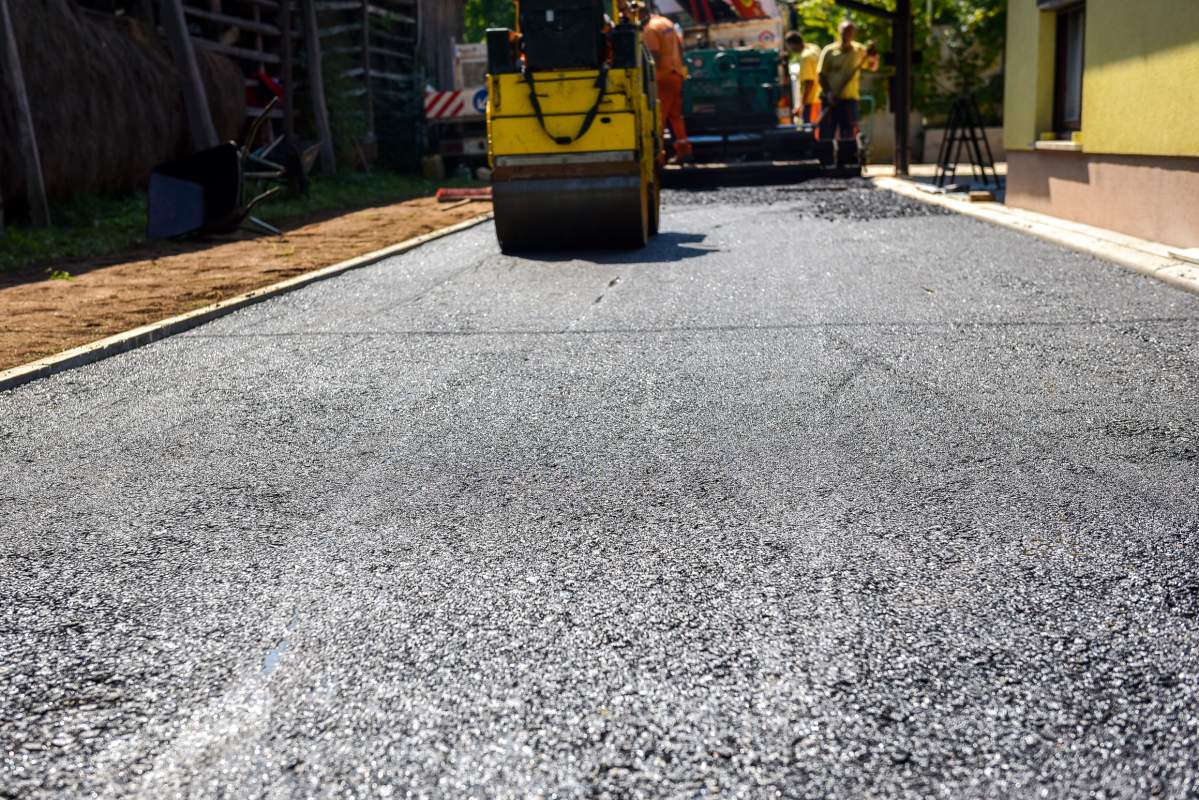
New asphalt can crack prematurely if the pavement structure is not prepared properly. The asphalt surface depends on the layers beneath it for support. If those layers are too thin, uneven, poorly compacted, or installed over unstable soil, the surface may move under normal use.
Installation-related causes can include:
- Insufficient base thickness
- Poor compaction
- Paving over wet or unstable ground
- Inadequate slope for drainage
- Applying asphalt during unsuitable conditions
- Weak joints between paving sections
- Using a surface layer that is too thin for expected loads
Not every early crack proves that installation was defective. Weather, drainage changes, landscaping, and unexpected loading can also affect newly paved areas. However, cracks that appear soon after paving deserve careful attention because they may indicate movement below the surface.
Can tree roots crack asphalt?
Tree roots can lift, distort, or crack pavement, particularly when roots grow beneath a driveway edge, walkway, or parking area. Root-related damage often appears as raised sections, uneven surfaces, or cracks that follow a localized pattern.
Trees do not need to be directly beside the pavement to affect it. Roots can extend outward beneath soil and seek moisture in or around pavement edges. At the same time, removing or cutting major roots may affect tree stability, so root-related pavement problems can involve both drainage and landscaping considerations.
Why does old asphalt crack more easily?
Asphalt contains binding materials that gradually oxidize from exposure to sunlight, oxygen, water, and temperature changes. Over time, the pavement becomes harder and less flexible.
Older asphalt is less able to absorb normal expansion, contraction, and vehicle movement. Surface color may fade from dark black to gray, and fine cracks may spread across larger areas. Age alone does not determine pavement condition, but aging makes the surface more vulnerable to other problems.
Maintenance can slow deterioration, but it cannot permanently restore flexibility that has been lost throughout the pavement structure.
When is a crack mainly cosmetic, and when is it a larger problem?
A narrow, isolated surface crack may remain manageable for a period of time, particularly if the surrounding pavement is firm and water drains well. Wider cracks, connected patterns, raised areas, soft spots, and depressions suggest more significant movement or base failure.
Pay closer attention when:
- Cracks widen noticeably after winter
- Multiple cracks connect into a network
- Water remains in or around the damaged area
- The pavement feels soft or flexes under a vehicle
- Edges are breaking away
- Potholes form near existing cracks
- A section has sunk, lifted, or shifted
The pattern, depth, drainage conditions, and movement beneath the pavement matter more than the crack’s appearance alone. In some cases, sealing a sound surface crack can reduce water entry. In others, surface treatment will not address a failing base or ongoing drainage problem.
Understanding the cause is the first step toward choosing an appropriate response. Asphalt that is protected from standing water, supported by stable underlying material, and inspected after harsh winter conditions is more likely to remain serviceable for many years.